
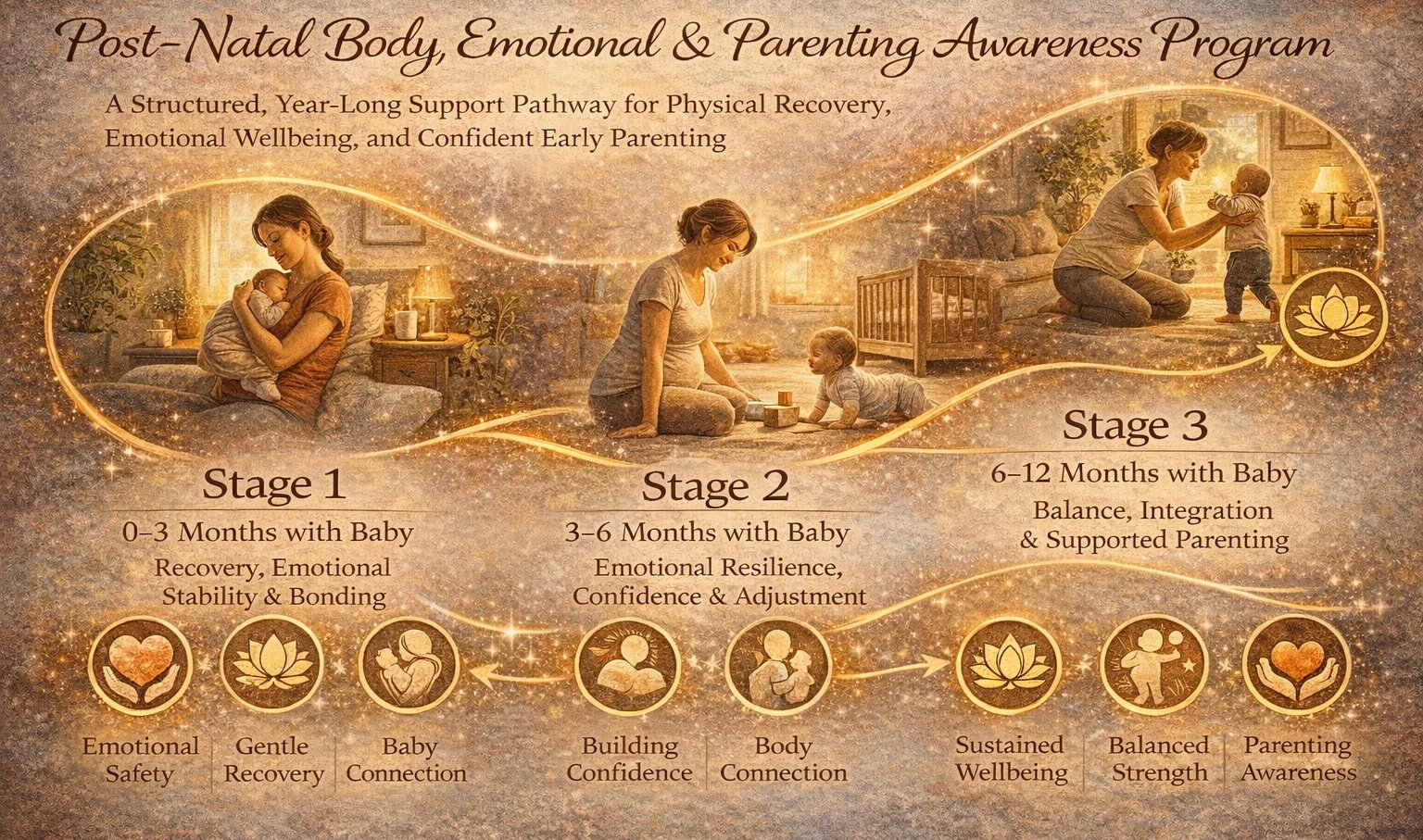
A structured, year-long support pathway for physical recovery, emotional wellbeing, and confident early parenting
Program Overview
The post-natal period is one of the most demanding and transformative phases in a woman’s life. Alongside physical recovery from childbirth, new mothers experience hormonal changes, sleep disruption, emotional sensitivity, identity shifts, and the responsibility of caring for a developing infant.
The Post-Natal Body, Emotional and Parenting Awareness Program is designed to support mothers throughout the entire first year after birth, addressing physical recovery, emotional wellbeing, and early parenting awareness in a gradual, developmentally aligned way.
Rather than offering isolated post-natal exercises or parenting advice, this program recognises that maternal mental health, emotional regulation, and nervous system stability are central to both maternal wellbeing and the early parent–child relationship.
The program is structured into three progressive stages, aligned with the baby’s first year of development. Each stage builds on the previous one, respecting the mother’s recovery timeline and the evolving emotional and practical demands of parenting.
This program complements standard medical and paediatric care and focuses on awareness, regulation, resilience, and confidence rather than performance, pressure, or idealised expectations.
Core Principles of the Program
• Emotional wellbeing and mental stability are foundational in early motherhood
• Physical recovery unfolds gradually and cannot be rushed
• Emotional fluctuation after birth is common and does not require fixing
• Calm presence and regulation support healthy bonding
• Parenting confidence develops through awareness, not comparison
Stage 1: 0–3 Months with Baby
Early post-partum support for recovery, emotional stability, and bonding
Overview
The first three months after birth are often characterised by physical vulnerability, hormonal fluctuation, emotional sensitivity, and sleep deprivation. Many mothers experience feelings of overwhelm, self-doubt, emotional intensity, or mental exhaustion during this phase.
Stage 1 of the program focuses on stabilisation and containment. The emphasis is on supporting emotional safety, nervous system settling, and gentle reconnection with the body, while creating a calm foundation for early bonding with the baby.
There is no expectation of strength, productivity, or rapid recovery during this stage. The focus is rest, reassurance, and presence.
Mental and Emotional Wellbeing Focus
• Supporting emotional stability during hormonal transition
• Reducing feelings of overwhelm, anxiety, or emotional overload
• Normalising mood changes and emotional sensitivity
• Encouraging self-compassion and realistic expectations
Physical Recovery and Body Awareness
• Very gentle yogasana practices supporting pelvic floor, spine, and posture
• Movements focused on comfort, circulation, and easing tension
• Emphasis on rest, pacing, and listening to bodily signals
• No strengthening or intensity during early recovery
Breath and Nervous System Regulation
• Calm, natural breathing practices to support settling and grounding
• Breath used as a resource during fatigue or emotional stress
• Support for relaxation during feeding, holding, or soothing the baby
Baby Bonding and Care Awareness
• Practices supporting calm presence and emotional attunement
• Awareness of baby cues through observation rather than instruction
• Encouragement of gentle connection during feeding and holding
• Support for confidence without comparison or pressure
Stage 2: 3–6 Months with Baby
Mid post-partum support for emotional resilience, confidence, and adjustment
Overview
Between three and six months post-partum, many mothers begin to regain physical capacity while continuing to adapt emotionally and mentally to ongoing caregiving demands. Babies become more alert and interactive, increasing both engagement and responsibility.
Stage 2 focuses on emotional resilience and confidence. The practices support mothers in regulating stress, rebuilding trust in their bodies, and maintaining emotional balance while navigating increased activity and stimulation.
The emphasis is on sustainability rather than intensity or rapid progress.
Mental and Emotional Wellbeing Focus
• Strengthening emotional resilience under ongoing demands
• Recognising stress patterns and early signs of overload
• Supporting confidence and self-trust as a parent
• Encouraging healthy boundaries and pacing
Physical Reconnection and Gentle Strength
• Gradual body awareness practices supporting core, back, and posture
• Gentle strengthening introduced with sensitivity and care
• Emphasis on functional movement for daily activities with baby
Breath and Emotional Regulation
• Breathing practices to support focus and emotional balance
• Breath used to manage frustration, fatigue, or mental noise
• Encouraging calm transitions between caregiving tasks
Baby Interaction and Parenting Awareness
• Supporting responsive interaction as baby becomes more active
• Encouraging presence during play, feeding, and daily routines
• Awareness of baby development without comparison or pressure
Stage 3: 6–12 Months with Baby
Later post-partum support for balance, identity integration, and sustained wellbeing
Overview
From six to twelve months post-partum, parenting often becomes more physically demanding as babies gain mobility and independence. At the same time, many mothers experience an identity shift as caregiving, personal needs, and external responsibilities converge.
Stage 3 supports long-term emotional balance and integration. The focus is on maintaining mental clarity, emotional steadiness, and physical sustainability while adapting to a more dynamic parenting phase.
Mental and Emotional Wellbeing Focus
• Supporting emotional balance amid increased activity and responsibility
• Encouraging integration of personal identity and motherhood
• Reducing chronic mental load and emotional fatigue
• Supporting long-term resilience rather than short-term coping
Body Awareness and Functional Strength
• Body awareness practices supporting strength, mobility, and posture
• Movements adapted to lifting, carrying, and active caregiving
• Emphasis on sustainability rather than intensity
Breath and Mental Clarity
• Breathing practices supporting mental clarity and emotional steadiness
• Breath used to reset during busy or demanding moments
• Encouraging mindful pauses throughout the day
Parenting Awareness and Relationship Support
• Supporting conscious interaction as baby develops independence
• Encouraging calm guidance and emotional presence
• Awareness of changing dynamics without control or pressure
Who This Program Is For
• New mothers seeking structured emotional and physical support
• Those experiencing emotional sensitivity, fatigue, or mental overload
• Parents wanting calm, confidence-building guidance in early parenting
• Individuals preferring a non-directive, awareness-based approach
Important Note
The Post-Natal Body, Emotional and Parenting Awareness Program is a holistic wellbeing practice. It does not replace medical, paediatric, or mental health care.
All practices are non-medical, non-diagnostic, and adapted to individual comfort. Participation is voluntary and based on personal responsibility.
Time : 60 Min
Price : 150