
In popular culture, yogasana is often equated with flexibility, strength, or visual mastery of postures. While these qualities may develop, they are secondary effects, not the primary purpose.
Classically, yogasana exists to prepare the body for stillness, clarity, and sustained attention. It reduces internal friction so that the body can remain upright, alert, and relaxed without strain.
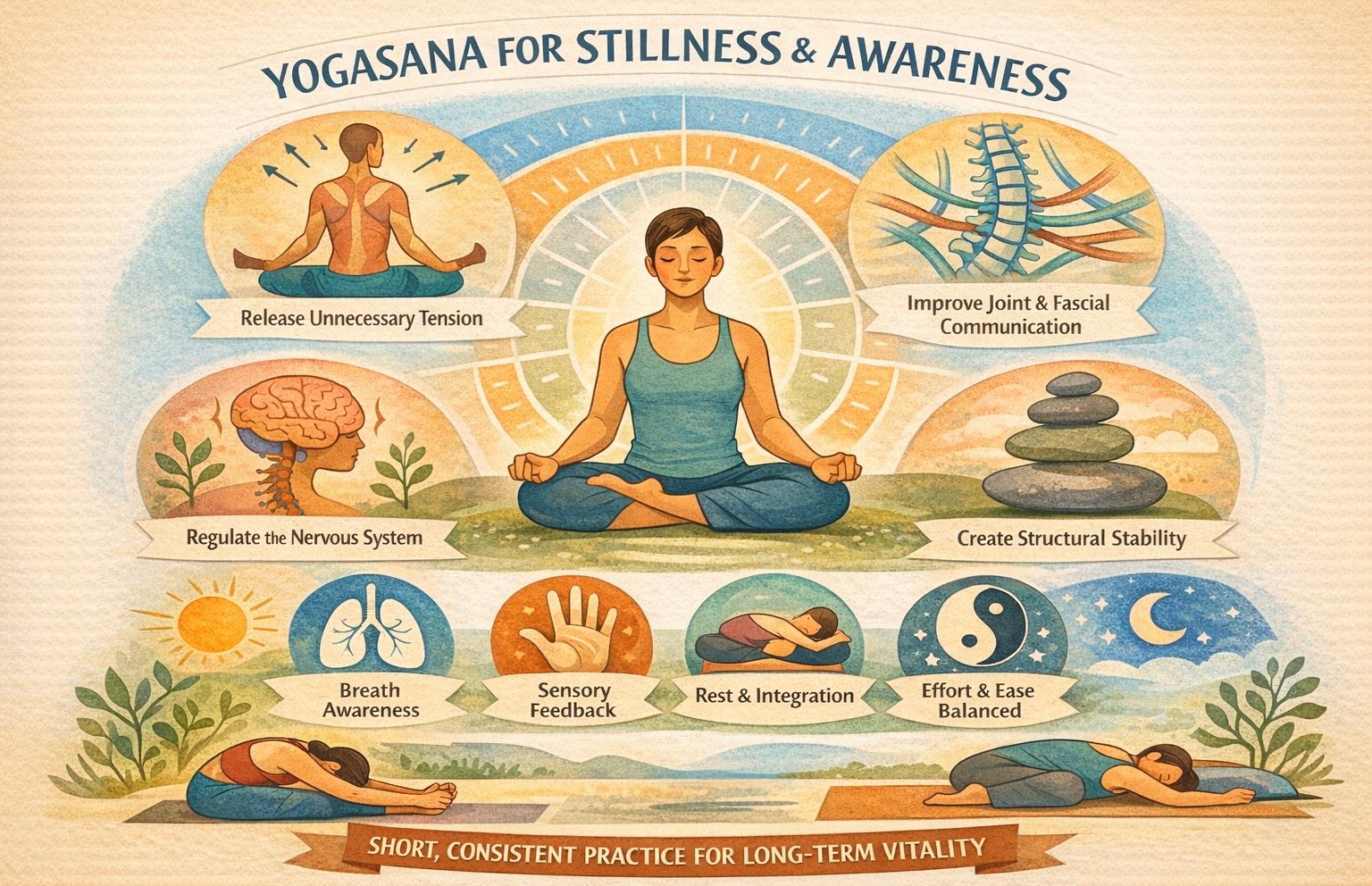
From a YOGA5D perspective, yogasana serves four core functions:
-
Releasing unnecessary muscular holding
-
Improving joint and fascial communication
-
Regulating the nervous system
-
Creating structural stability with minimal effort
Postures are not destinations. They are containers for awareness.
When postures are forced, rushed, or compared, the nervous system enters a defensive state. This may look productive, but it reduces long-term vitality. When postures are entered gradually, with breath and attention, the body reorganises itself organically.
Short, consistent practice is more effective than occasional intensity. A calm 25–30 minute routine performed regularly supports circulation, posture, digestion, and recovery far more reliably than sporadic exertion.
In YOGA5D, yogasana is always integrated with:
-
Breath awareness
-
Sensory feedback
-
Rest and integration phases
Movement without integration stimulates.
Movement with integration regulates.
Vitality grows when effort and ease are balanced.