
What is the ego?
In contemporary spiritual discourse, the idea of ego dissolution is often misunderstood. Ego is frequently portrayed as something that must be destroyed or eliminated. In reality, as long as one is living within physical existence, some form of ego—identity and individuality—will naturally remain.
Ego does not disappear simply because one seeks enlightenment. Rather, the true work lies in understanding, refining, and mastering the ego, not attempting to erase it.
Ego is the interface through which consciousness experiences physical reality. It allows perception, relationship, learning, and action. Without it, there would be no experience of life as a distinct individual.
Ego and Mastery
The aim of inner work is not ego elimination, but ego integration.
When the ego is unconscious, it dominates experience through fear, attachment, and reactivity.
When the ego is understood, it becomes a functional tool—responsive rather than controlling.
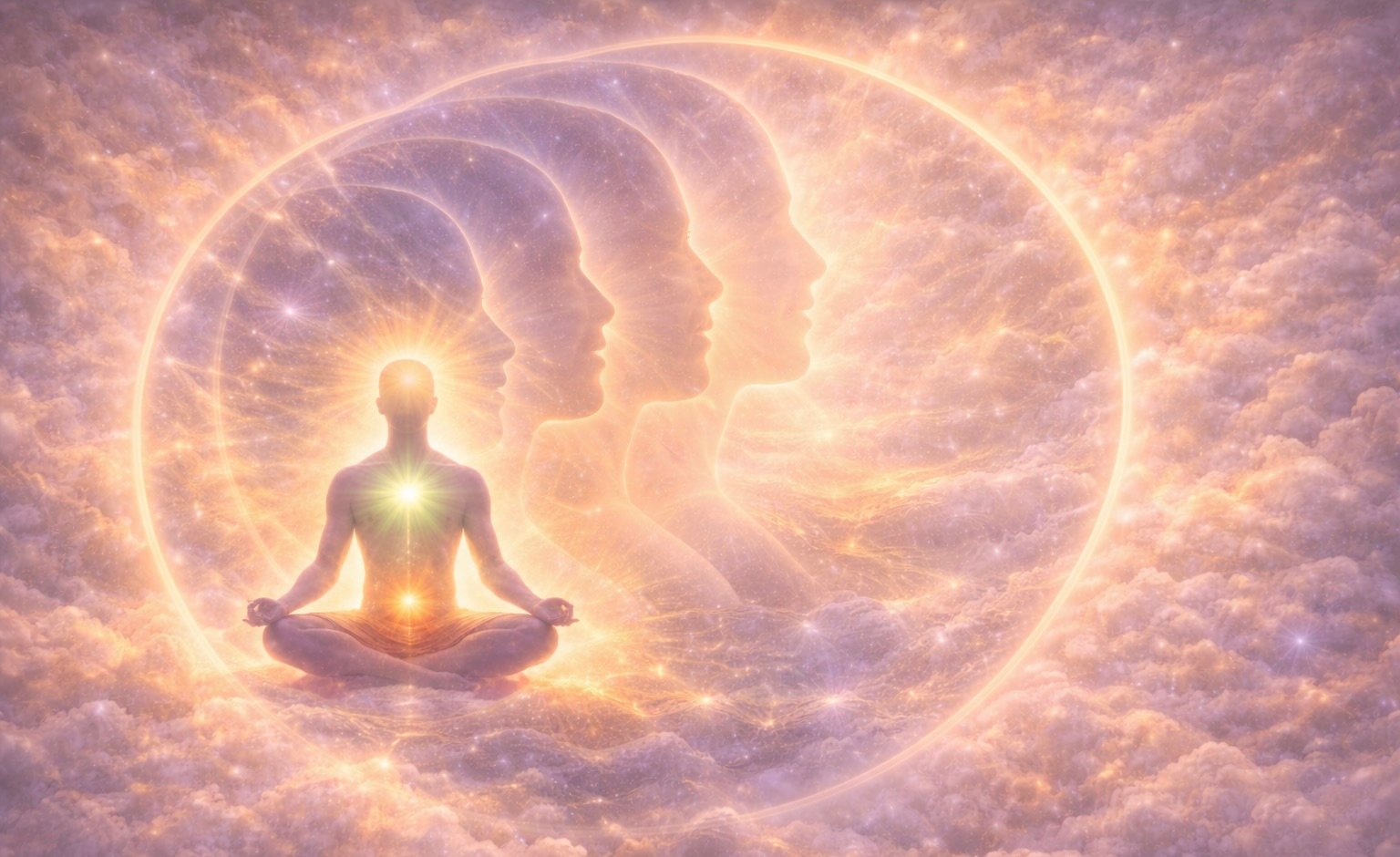
In deep meditative absorption (samadhi), identification with the body and mind temporarily dissolves. In such moments, ego is not destroyed—it is simply set aside, much like removing a garment when it is no longer needed. When awareness returns to embodied life, identity re-forms naturally.
The difference lies in relationship:
-
An untrained ego controls experience.
-
A trained ego serves awareness.
Ego, Individuality, and Creation
At its most fundamental level, ego can be understood as individuality.
From a contemplative perspective, creation arises as differentiation—something emerging from apparent nothingness. Whether described through philosophy, metaphysics, or modern physics, the movement from unity to multiplicity is intrinsic to existence.
Individuality exists at every scale: atoms, organisms, minds, societies. Ego, in this sense, is not a flaw—it is a structural feature of manifested reality.
As awareness deepens, identification with individuality loosens. One can function fully as an individual while no longer being confined by identity.
Enlightenment and Identity
Enlightenment is not the annihilation of individuality, but the recognition of what lies beyond it.
It is the capacity to move freely between:
-
Form and formlessness
-
Identity and presence
-
Engagement and detachment
Some individuals realise this capacity gradually through lived experience and disciplined practice. Others appear to embody it naturally from early life. These distinctions are descriptive, not hierarchical.
What matters is not the label, but the clarity, humility, and responsibility with which awareness is expressed.
In Essence
-
Ego is not the enemy.
-
Ego is not meant to be destroyed.
-
Ego is meant to be understood, refined, and transcended when appropriate.
-
Freedom arises not from losing identity, but from no longer being limited by it.
Enlightenment is not the disappearance of self, but the ability to rest in what exists before and beyond identity, while still participating fully in life.