
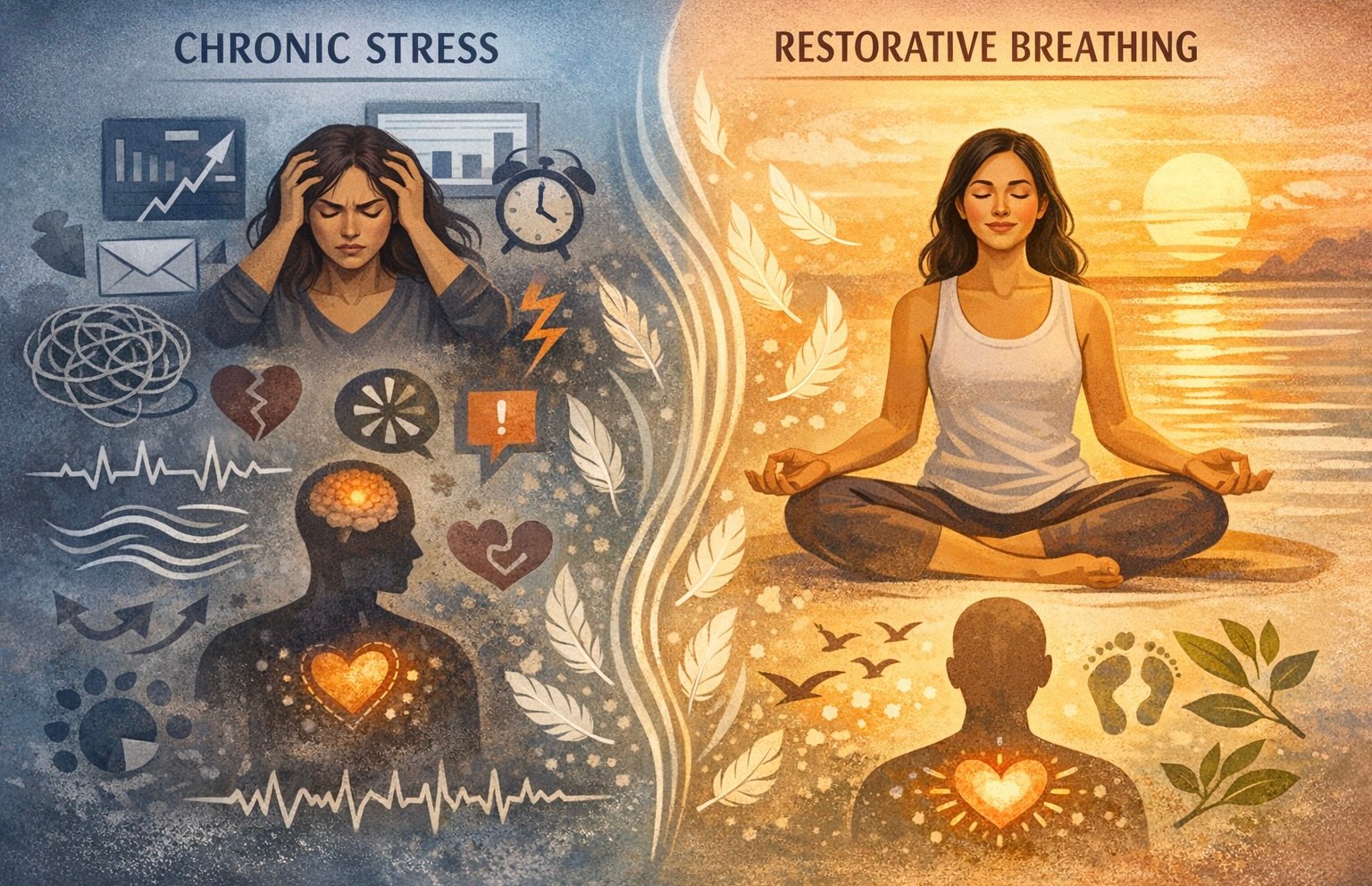
Modern stress differs significantly from acute survival stress. It is subtle, continuous, and embedded in daily routines.
Most people do not feel “stressed” in a dramatic sense. Instead, they experience:
-
Persistent low-level tension
-
Difficulty fully resting
-
Mental fatigue without clear cause
-
Emotional reactivity disproportionate to events
Breathing patterns adapt to this environment. Shallow breathing, breath-holding, and irregular rhythms become habitual.
These patterns maintain sympathetic nervous system activation even in the absence of real threat.
YOGA5D breath practices focus on restoring the capacity to return to baseline after stimulation. The aim is not to eliminate stress, but to prevent stress from becoming the default state.
Key principles include:
-
Emphasising exhalation rather than inhalation
-
Reducing effort rather than increasing control
-
Supporting rhythm over depth
-
Encouraging sensory grounding
These approaches align with both nervous system science and yogic wisdom.
Over time, regulated breathing supports:
-
Faster recovery after demanding situations
-
Improved emotional resilience
-
Reduced background anxiety
-
Greater tolerance for complexity
Stress becomes a temporary state rather than a permanent condition.