
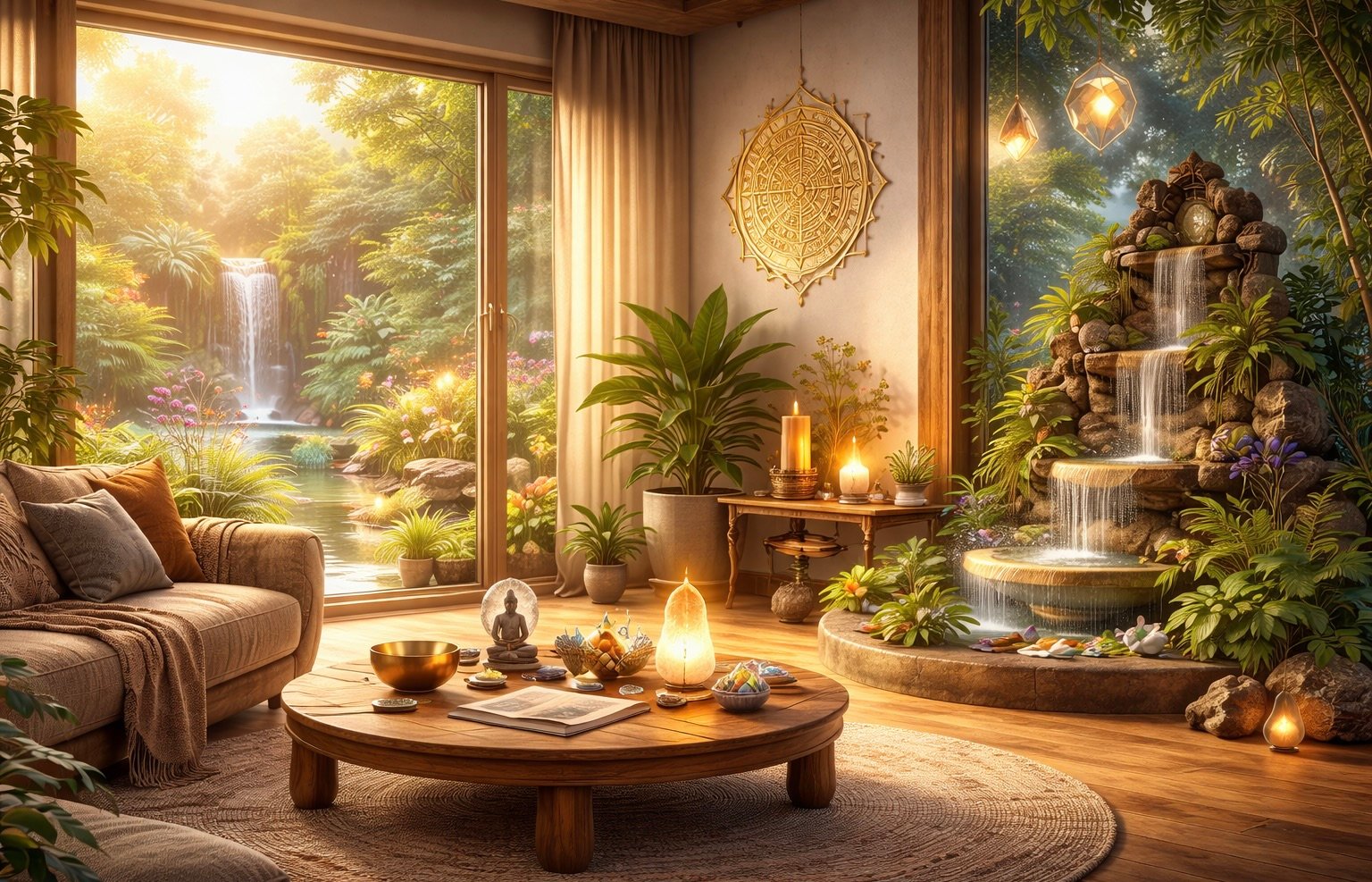
Environmental Psychology is a recognised interdisciplinary field that studies how physical environments influence human perception, emotion, behaviour, and stress regulation. It explores how space, light, sound, layout, materials, and sensory stimuli shape mental and emotional well-being.
In practice, the environments we inhabit—homes, workplaces, and public spaces—directly affect focus, mood, nervous system regulation, and long-term psychological health.
This approach focuses on designing spaces that are psychologically supportive from the outset. It considers layout, orientation, sensory balance, and functional harmony to encourage calm, clarity, and emotional stability.
This approach involves assessing and recalibrating spaces that may contribute to stress, fatigue, or emotional imbalance. Subtle factors—such as clutter, lighting, noise, spatial flow, and symbolic associations—can significantly influence how a space is experienced.
Even small stressors, when accumulated, can alter how an environment feels and functions.
In contemporary urban life, many environments share common psychological stress factors, including:
Reduced exposure to natural elements
Prolonged indoor living
Sensory overload and visual clutter
Electromagnetic exposure and constant digital engagement
Poor spatial flow and lighting imbalance
Since most individuals spend the majority of their time at home and work, the psychological quality of these spaces plays a critical role in overall well-being.
Human experience of space is mediated through the senses and processed uniquely by each brain. Factors influencing perception include:
Neurological sensitivity
Early conditioning and cultural background
Emotional memory
Daily stress load
The same space may feel calming to one person and overwhelming to another. Environmental Psychology addresses this by understanding how external conditions interact with internal mental states.
While Environmental Psychology works with observable sensory and behavioural factors, traditional systems describe space using the language of energy and vibration. In this context, “energy” refers to the cumulative psychological, sensory, and symbolic impact of objects, layouts, and orientations.
Visual appeal alone does not guarantee a supportive environment. The overall experience of a space emerges from the combined influence of all its elements.
Ancient cultures developed sophisticated frameworks to understand human–environment interaction:
Vastu Shastra (Sthapatya Veda) from India
Feng Shui from East Asia
These systems observe directional flow, spatial balance, and environmental harmony. When applied thoughtfully, they complement modern psychological insights by offering symbolic and experiential alignment rather than predictive claims.
Our approach integrates:
Environmental psychology principles
Sensory and stress analysis
Behavioural impact assessment
Traditional spatial wisdom (Vedic Vastu)
The goal is not perfection, but functional harmony—spaces that support clarity, emotional balance, and sustainable well-being in everyday life.
Optimising the environments you live and work in is not an aesthetic exercise alone; it is a foundational element of mental, emotional, and energetic health.