
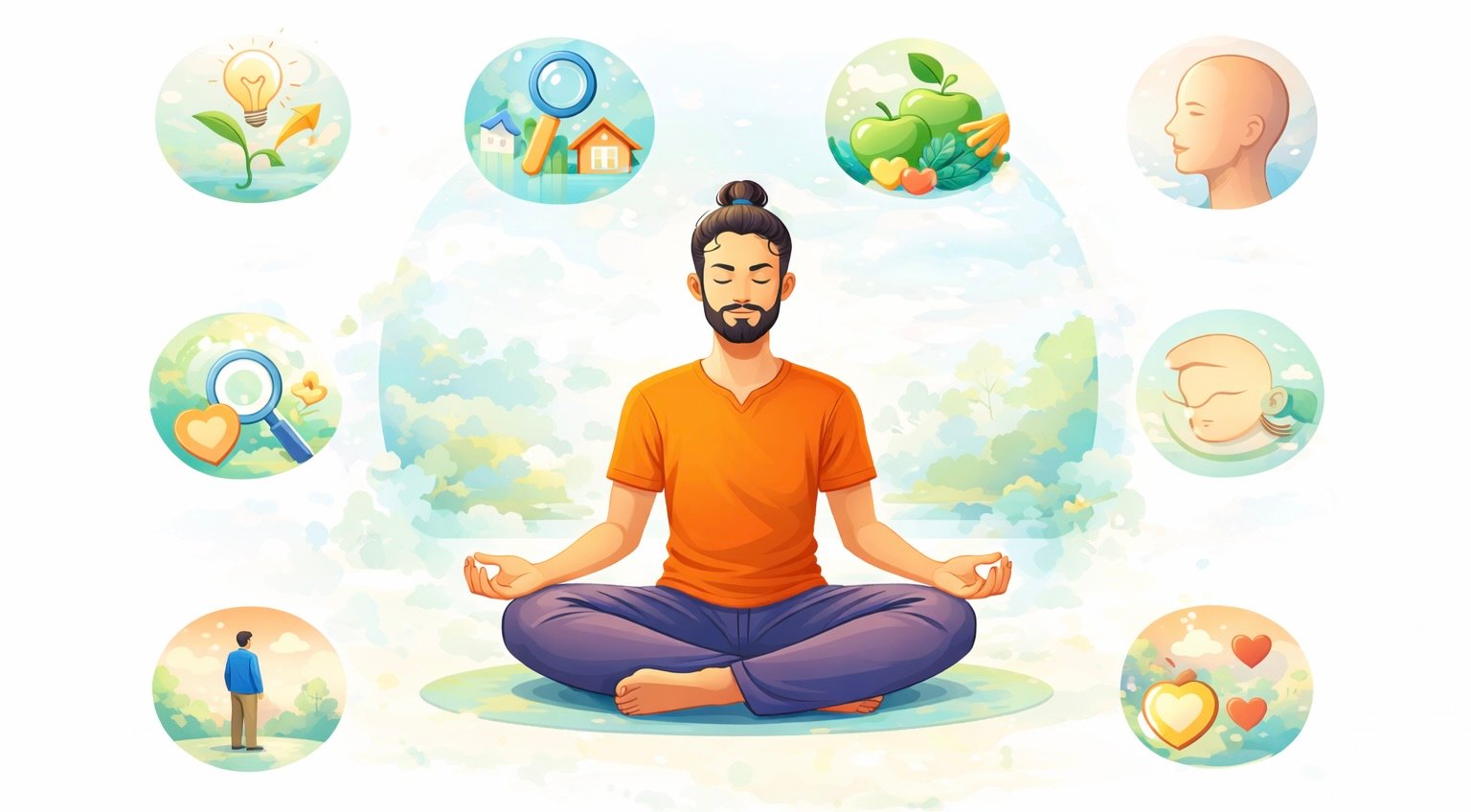
Yoga is an ancient system for cultivating balance, awareness, and clarity across body, mind, and inner life. In the modern world, yoga is often associated primarily with physical postures. While yogasanas offer significant benefits, they represent only one aspect of a much broader contemplative science.
Traditionally, yogasanas were designed to prepare the body for stillness, allowing the practitioner to sit comfortably in meditation and develop sustained awareness. When practice deepens beyond physical movement and becomes integrated into daily life, subtle internal shifts may begin to occur.
These changes are not goals, achievements, or measures of progress. They are natural expressions of increased sensitivity, regulation, and inner coherence that some practitioners notice over time.
elow are commonly reported experiences observed in long-term yogic and contemplative practice.
-
Changing relationship with food
You may notice that the body becomes more sensitive to what it consumes. Digestion often becomes more efficient, and preferences may naturally shift toward lighter or simpler foods, without force or ideology.
-
Surfacing of unresolved emotions
Old emotional patterns or memories may arise into awareness. Rather than being overwhelming, they are often experienced with greater presence and clarity, allowing them to be processed without suppression.
-
Increased mental quiet
Periods of reduced mental noise may occur spontaneously. Thoughts continue to arise, but they no longer dominate attention in the same way.
-
Slowing of breath
Breathing may naturally become slower and more subtle during rest or meditation, reflecting a calmer nervous system rather than conscious control.
-
Ease in stillness
The body and senses may settle more quickly when external stimulation decreases. Closing the eyes or sitting quietly can feel natural rather than effortful.
-
Moments of uncaused contentment
You may experience brief states of calm or contentment without an obvious external reason. These moments tend to arise quietly and pass without attachment.
-
Heightened intuitive awareness
Decision-making may become clearer, with a stronger sense of timing or alignment. This is often experienced as practical intuition rather than prediction.
-
Sensitivity to environments
You may become more aware of how different spaces, people, or situations affect your internal state, noticing what supports calm and what creates agitation.
-
Greater emotional resilience
Challenging environments or emotional dynamics may still be perceived, but they are less likely to destabilise you internally.
-
Desire for solitude
Time alone may feel nourishing rather than isolating, supporting reflection, integration, and mental rest.
-
Comfort in aloneness
Being alone may no longer feel like loneliness, but like a neutral or even restorative state.
These experiences vary greatly between individuals and are not linear. Some may appear briefly, some may recur, and others may never arise at all. The yogic path is not about accumulating signs or experiences, but about developing steadiness, clarity, and presence within ordinary life.
True integration is reflected not in extraordinary sensations, but in how one lives, relates, works, and responds to everyday challenges with greater balance and awareness.