
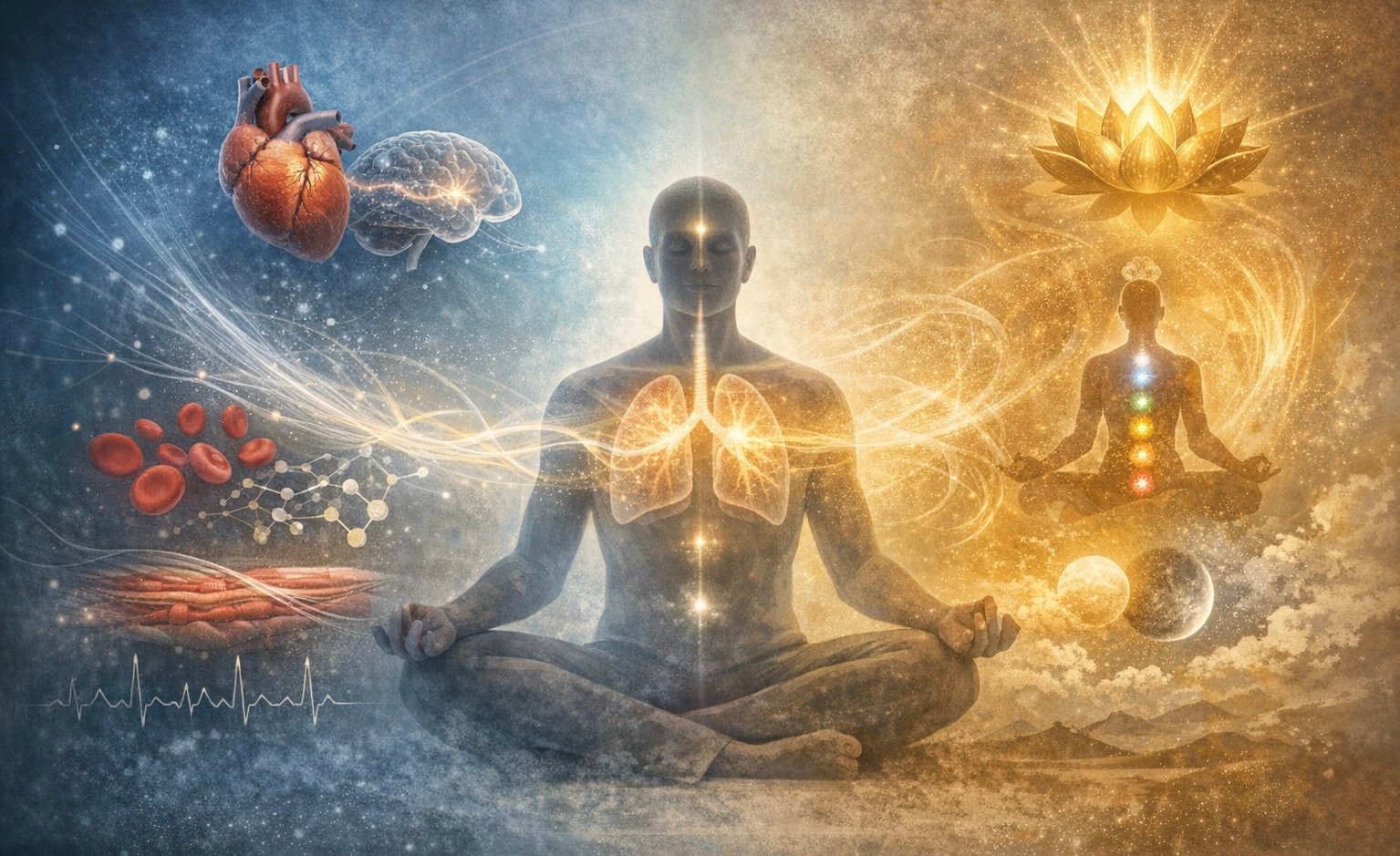
Breath is not merely a mechanical exchange of oxygen and carbon dioxide. It is the most direct and accessible interface between the body, the nervous system, and conscious awareness.
Unlike heartbeat, digestion, or hormonal regulation, breathing can function both involuntarily and voluntarily. This dual nature makes breath a powerful regulatory bridge: it allows conscious influence over processes that are otherwise automatic.
From a contemporary physiological perspective, breathing patterns influence:
-
Heart rate variability
-
Autonomic nervous system balance
-
Blood chemistry
-
Muscular tension
-
Sensory processing
From a yogic perspective, breath governs the movement of prana—the life force that animates bodily function, emotional tone, and mental clarity.
In modern life, breath often becomes shallow, fragmented, or constrained. This is rarely intentional. It emerges as a response to chronic stimulation, emotional suppression, sedentary posture, and persistent cognitive engagement.
When breathing becomes dysregulated, the nervous system receives continuous signals of urgency, even in safe environments. Over time, this contributes to fatigue, emotional volatility, and reduced capacity for rest.
At YOGA5D, breath is approached as a restorative mechanism, not a performance technique. The goal is not to breathe “better,” but to remove interference so that natural breathing can re-establish its inherent
rhythm.
Regulated breathing supports:
-
A sense of internal safety
-
Reduced background tension
-
Increased emotional tolerance
-
Clearer mental space
Breath is not used to escape experience. It is used to stabilise the system so experience can be met without overwhelm.