
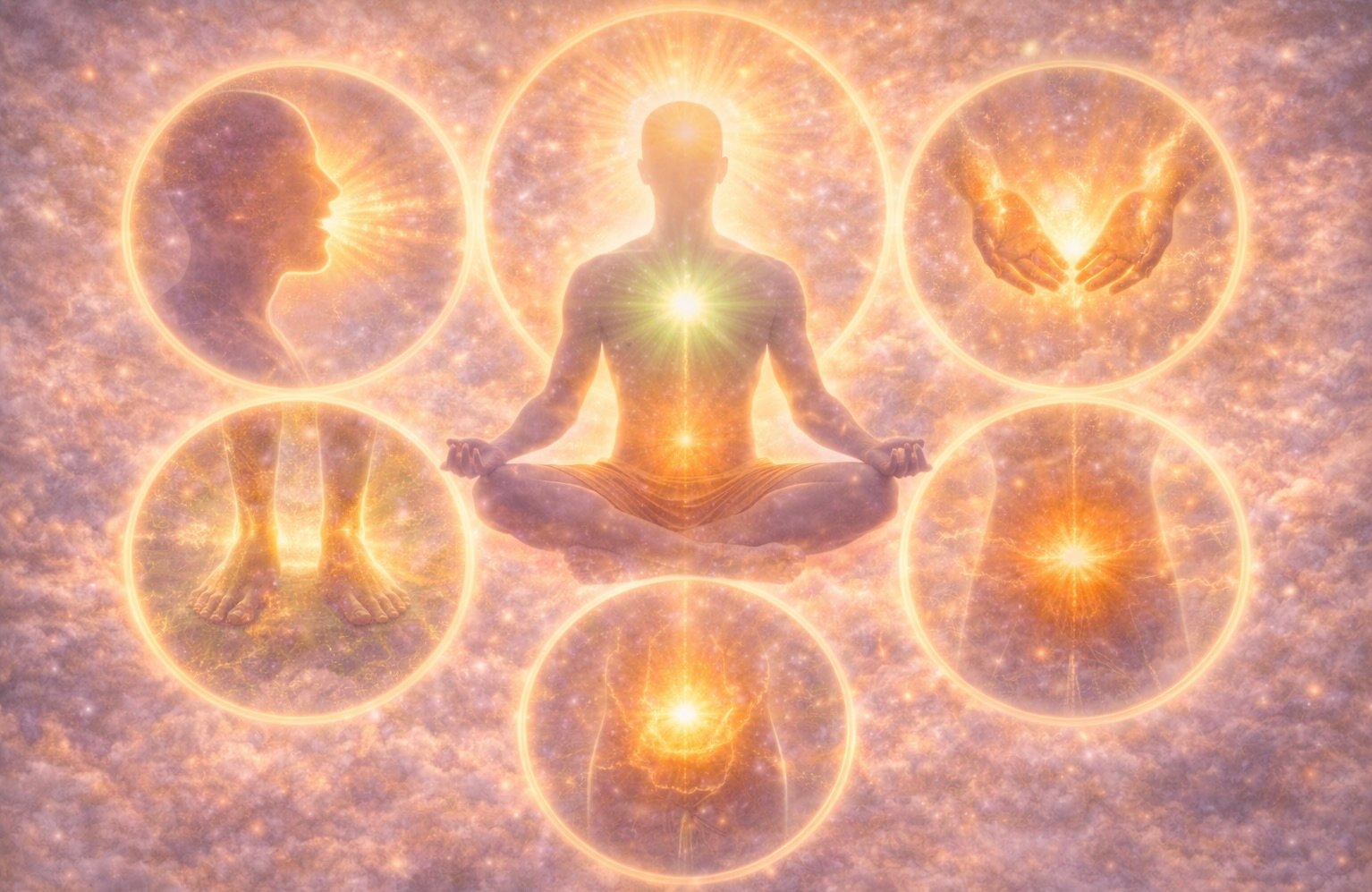
In yogic science, human experience is not defined only by what we think or feel, but by how we act in the world.
The Karmendriyas are the five organs of action—the channels through which inner intention becomes outer movement.
They are not merely physical organs; they are interfaces between consciousness and matter.
Understanding the Karmendriyas brings clarity to habits, behaviour, karma, and the relationship between inner awareness and outer life.
What Are Karmendriyas?
Karma means action.
Indriya means instrument or faculty.
Karmendriyas are the five functional expressions of action through which human energy interacts with the world.
They translate inner impulses into physical reality.
The five Karmendriyas are:
-
Vak — Speech
-
Pani — Hands
-
Pada — Feet
-
Payu — Elimination
-
Upastha — Reproduction & creative expression
The Five Karmendriyas Explained
1. Vak — Speech (Expression & Truth)
Speech is not only communication; it is vibration made audible.
Vak governs how thoughts, emotions, and intentions are shaped into sound.
Imbalanced speech often reflects:
-
Emotional suppression
-
Fear of expression
-
Habitual dishonesty or over-talking
Balanced Vak results in:
-
Clarity
-
Truthful expression
-
Conscious communication
Silence is not the absence of Vak—it is its refinement.
2. Pani — Hands (Creation & Interaction)
Hands represent agency—our capacity to shape, build, give, and receive.
They are the primary tools of karma in daily life.
Imbalances show up as:
-
Restlessness
-
Compulsive doing
-
Difficulty receiving or letting go
Balanced Pani allows:
-
Skillful action
-
Service without exhaustion
-
Precision without force
3. Pada — Feet (Movement & Direction)
Feet determine where life moves.
They govern grounding, progress, and stability.
Imbalances may manifest as:
-
Feeling stuck
-
Chronic instability
-
Difficulty committing to direction
Balanced Pada brings:
-
Steady progress
-
Grounded decision-making
-
Ease in transitions
4. Payu — Elimination (Release & Detox)
Payu governs the body’s ability to release waste—physical, emotional, and psychological.
Retention at this level creates stagnation.
Imbalance can appear as:
-
Physical constipation
-
Emotional holding
-
Fear of letting go
Balanced Payu allows:
-
Healthy elimination
-
Emotional processing
-
Psychological clarity
Release is as essential as action.
5. Upastha — Reproduction & Creative Force
Upastha governs sexual energy, creativity, and vitality.
In yogic understanding, this energy is neither suppressed nor indulged—it is consciously directed.
Imbalance leads to:
-
Compulsion or repression
-
Energy depletion
-
Confusion between intimacy and validation
Balance results in:
-
Creative flow
-
Emotional intimacy
-
Sustainable vitality
Karmendriyas and Karma
Every action leaves an imprint.
The Karmendriyas are the mechanism through which karma is created and resolved.
When action arises from awareness, karma dissolves.
When action arises from unconsciousness, karma accumulates.
Yoga is not withdrawal from action—it is refinement of action.
Integration in YOGA5D Practice
YOGA5D does not isolate philosophy from life.
Karmendriya awareness is cultivated through:
-
Conscious movement
-
Breath-based regulation
-
Silence and observation
-
Lifestyle alignment
-
Embodied mindfulness
The goal is not control—but clarity in action.
Closing Reflection
Freedom is not the absence of action.
Freedom is action without inner friction.
When the Karmendriyas function in harmony, life flows naturally—without resistance, guilt, or exhaustion.